Skid-Mounted Solids Control System: Integrated Solution for Drilling and Environmental Operations

The skid-mounted solids control system is an integrated solution designed for drilling operations and environmental solid control applications. Unlike standalone equipment, it combines multiple functions, including solid-liquid separation, gas-liquid separation, drilling fluid purification, and material storage, into one unified system.

This integrated design enables one-stop deployment, simplifies field operations, reduces construction complexity, and lowers labor requirements. The system is widely used in oil and gas drilling, coalbed methane exploration, trenchless drilling, tunnel boring, and sludge treatment projects.

Modular Design and Flexible Configuration

The core advantage of KOSUN’s skid-mounted solids control system is its modular design and flexible configuration. Operators can combine standardized skid-mounted units to meet specific operational requirements, enabling both conventional applications and customized solutions for challenging conditions.

The compact skid structure reduces the need for complex foundations and allows easy installation, dismantling, and transportation. This enables rapid deployment in remote locations and complex environments while reducing project costs and setup time.

High Efficiency, Environmental Protection, and Stable Operation

KOSUN’s skid-mounted solids control system combines advanced separation technology with independently developed equipment and patented innovations. It provides efficient drilling fluid purification and solid-liquid separation while improving recovery rates and reducing waste.

The system uses high-strength, corrosion-resistant, and wear-resistant materials to withstand harsh operating conditions. Intelligent centralized control, safety protection systems, and reliable sealing technology ensure continuous and stable operation while supporting environmentally responsible practices.

Creating Value Through Integration and Professional Technology

Integration and innovation are the foundation of KOSUN’s skid-mounted solids control solutions. By continuously improving technology, manufacturing capabilities, and industry expertise, KOSUN helps customers achieve more efficient, convenient, and environmentally friendly operations.

The company remains committed to reducing costs, improving productivity, and supporting sustainable development across multiple industries.

Conclusion

KOSUN’s skid-mounted solids control system provides an integrated, modular, and environmentally friendly solution for drilling and industrial applications. With extensive experience, global service capabilities, and continuous innovation, KOSUN delivers reliable solids control solutions worldwide.

What Is a Sludge Dewatering Decanter Centrifuge?

A centrifuge separates liquids from solids, but does it purify water? In wastewater treatment, a sludge dewatering decanter centrifuge uses centrifugal force to separate solids from liquids. It reduces sludge volume and increases solid content, making it easier to store, transport, and dispose of the sludge.

Advantages of a Sludge Dewatering Decanter Centrifuge

Efficient Solids Separation: The high-speed rotation of the sludge dewatering decanter centrifuge separates solids from liquids, resulting in significantly higher solid content in the final product.

Cost-Effective: The sludge dewatering process is much faster and more efficient than other methods, reducing time and resources required for dewatering.

Energy Efficient: The sludge dewatering decanter centrifuge uses less energy than other dewatering methods, making it a more environmentally friendly option.

How a Centrifuge Operates

The sludge is fed into the sludge dewatering decanter centrifuge and spun rapidly, separating solids from liquids. When the solids are forced towards the outer walls, they are separated by a scroll, and the liquids are expelled through a discharge outlet.

Components of a Centrifuge

Bowl: The main component where solids and liquids are separated.

Scroll: Transports the settled solids towards the conically narrowing end of the bowl.

Drive: Provides the power to spin the bowl, allowing for separation.

Control Panel: Allows operation of the sludge dewatering centrifuge , including speed and direction control.

What Does a Centrifuge Do in Wastewater?

Wastewater treatment uses a sludge dewatering centrifuge to separate solids and liquids, reducing sludge volume and increasing solid content. This process makes storing, transporting, and disposing of the sludge easier.

Centrifuge Dewatering Process

The process of centrifuge dewatering includes:

Feeding: The sludge is fed into the centrifuge .

Separation: The high-speed rotation of the bowl separates solids from liquids.

Collection: Separated solids collect at the outer walls and are transported by the scroll to the discharge outlet.

Discharge: The liquids are expelled through a discharge outlet.

What Is the Difference Between Thickening and Dewatering?

Sludge thickening is the initial step in reducing sludge volume by removing free water, which increases the solids concentration but still leaves the sludge in a liquid-like state. Sludge dewatering follows, removing floc-bound and capillary water through processes such as centrifugal force, resulting in a much drier, solid product with significantly reduced volume.

Both processes are used in wastewater treatment to make it easier to store, transport, and dispose of sludge.

What Industries Use a Sludge Dewatering Decanter Centrifuge?

The equipment is used across numerous industries, including:

  • Paper and pulp
  • Chemical
  • Food and beverages
  • Refineries
  • Mining
  • Pharmaceuticals

Rapid urbanization, technological developments, and growing production units add to the demand for processed water — a key driver for economic growth.

Conclusion

The sludge dewatering decanter centrifuge is an essential tool for modern wastewater treatment. By efficiently separating solids from liquids, it reduces sludge volume, lowers disposal costs, and supports environmental compliance. Whether in municipal wastewater plants or industrial applications, this technology delivers reliable, cost-effective performance.

Linear Motion Shale Shaker Efficiency: Key Factors

During oil drilling, drilling fluid is initially transported to the mud control system by mud pumps before entering the linear motion shale shaker. As the first processing equipment, the drilling fluid vibrating screen plays a key role in solid-liquid separation. The operational efficiency of the linear motion shale shaker directly determines the processing capacity of the entire mud control system. The main factors affecting its efficiency fall into three categories.

Vibration Mode of the linear motion shale shaker

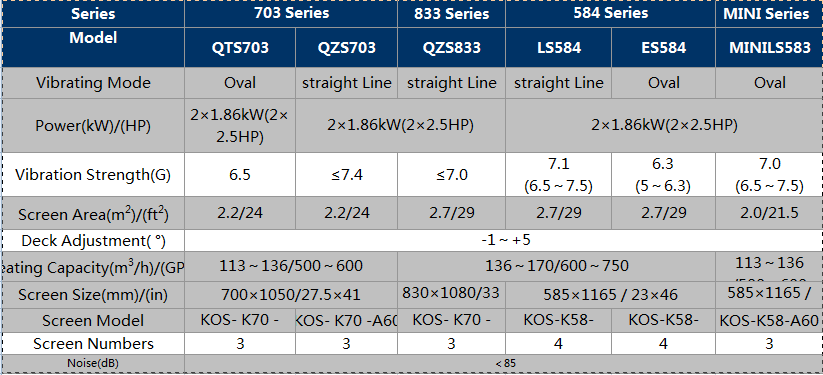
The vibration modes of a linear motion shale shaker include linear, circular, and elliptical motion. The position of the vibrator’s center of gravity determines the mode.

A center of gravity located within the vibrator causes the equipment to generate circular motion. When the center of gravity is positioned above the vibrator, elliptical motion is produced. As a result, this motion relies on the screen slope to transport cuttings while simultaneously reducing processing capacity. Moving the center of gravity above and slightly forward of the vibrator results in linear screen motion, which maintains a stable cuttings conveying speed.

Amplitude and Frequency

Amplitude, vibration mode, and motor speed jointly determine vibrating screen capacity. Motor speed affects vibration frequency — the higher the frequency, the better the solid-phase separation. Domestic high-frequency vibrating screens typically run at 2,000 times per minute.

Amplitude is the vertical movement distance, which is determined by vibration mass and eccentricity. Higher amplitude improves processing; however, it also increases equipment stress, which can potentially shorten service life. Therefore, a balance between performance and durability is essential.

Mesh Count and Material of the Screen

Shale vibrating screens typically have 2 to 4 screen layers. Drilling fluid passes through each layer for classification treatment. Improper mesh selection or screen damage significantly reduces separation efficiency. Poor installation also causes premature wear or tearing. Material properties and installation quality are critical for stable operation.

The KOSUN Advantage in Linear Motion Shale Shakers

KOSUN linear motion shale shakers offer significant advantages. First, modular design and high-precision processing ensure smooth, reliable operation while simplifying maintenance. Second, multiple adjustable vibration modes adapt to different formation conditions, from soft clay to hard rock. Third, high-quality motors and shock absorption systems extend service life by preventing premature wear. Finally, high-strength composite screen mesh materials enhance durability and processing efficiency, providing an economical, all-around solids control solution.

Conclusion

Overall, the efficiency of a drilling fluid vibrating screen depends on several factors, namely vibration mode, amplitude, frequency, and screen mesh. Thus, each of these elements directly affects solids control performance. By choosing a high-quality linear motion shale shaker like KOSUN, with modular design, adjustable modes, quality motors, and composite screens, operators can maximize solids control efficiency and reduce drilling costs.

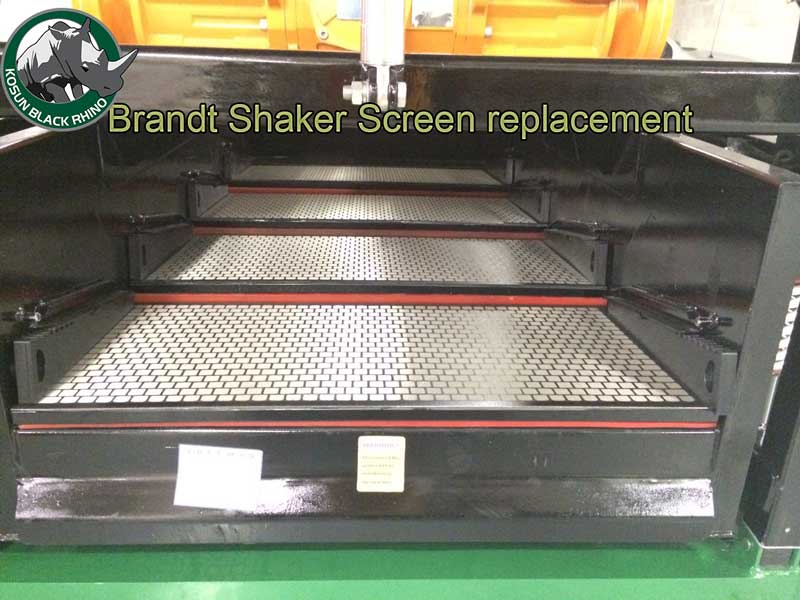
Brandt Shaker Screen Replacement from Kosun

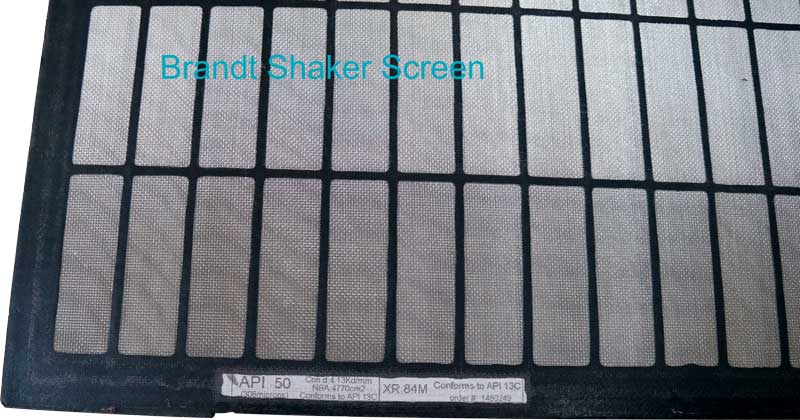
Brandt Shaker Screen

Shale shaker is a very important equipment that is used in the first stage separation of drilling liquids and the solid materials obtained from drilling oil, gas or water wells. This shale shaker consists of a shaker screen that does the separation process.

Brandt Shaker Screen comes in various types and different mesh sizes. Its two main types are the hook type and pretension type. Also the amount and the size of the solid that will get separated depends upon the size of the mesh.

Brandt Shaker Screen

Because of its importance, it is very important that the shaker screen is cleaned regularly. Cleaning it regularly will increase its efficiency and will delay the wear and tear of the mesh.
Various methods of cleaning the screen are;
1) Self Cleaning:
– This methodology involves the use of small folded or creased wires.
– These wires are arranged on a surface in such a way that small gaps are created resulting in a mesh like structure. This is usually supported using Support bars so that they are free to vibrate. These vibrations prevent the blocking or jamming of the mesh.
2) Water based cleaning:
– In this method a high pressure water pipe is used that cleans the screen by pouring water on it at a very high speed. This is a very traditional method that cleans the screen when less cleaning is required.
3) Screen cleaning machines:
– These machines are fully enclosed machines. The screen is placed inside this machine where a powerful water gun, releasing water at a very high pressure, is used that cleans the screen.
– The advantage of this machine is that it is fully automatic and no effort is needed at the workers part.
– Also this machine reduces the time required for cleaning a screen there by increasing the overall cost effectiveness.

Welcome to contact us !

Shaker Screens Replacement of Kosun Manufacturer

Shaker Screens is a critical component in solids control equipment used in the drilling industry. Drilling operations use a borehole technology to penetrate deep beneath the surface to reach the fossil fuel, in this pursuit, the mud-loggers first need to do a sampling to ascertain the depth and quality of the rock they are penetrating.

In oil field digging, let’s suppose in an off-shore site, this drilling will be done with the help of a drilling rig. As the drilling bit will cut through the rock underneath the ocean floor, it will need some lubricant to keep it going, a drilling fluid is used for that purpose.

A drilling fluid is a rich mixture of different chemicals, either oil-based or water-based, this is commonly known as “drilling mud”. This drilling mud is very expensive to create, and it doesn’t only keep the equipment lubricated but also helps in keeping it cool and clean for further operations.

The drilling bit will carry with itself drilling cuttings, essentially the rock shavings, mixed with drilling mud. The mud-loggers will extract these shavings from the drilling bit for further analysis.

As explained earlier in the article, the drilling fluid is quite expensive so it is imperative for the operators to restore the drilling fluid from the drilling waste. For this purpose, various solid control types of equipment are used, among them a shale shaker is the foremost.

A shale shaker with the help of  shaker screens helps separate the drilling cuttings from drilling fluid, and the separated drilling fluid is channeled to a separate container for further processing and treatment. The dried solid, i.e. drilling cuttings are conveyed to a separate container for further treatment and disposal.

One very important factor in the solid control system is its contribution to environmental balance. If a solid control system is not efficient enough, it is likely that the drill cuttings will still carry some amount of drilling fluid that contains chemicals that could be really harmful to the environment and cause contamination of soil or groundwater. The drilling industry follows strict rules on drilling waste management for the sake of environmental impact.

In conclusion, a shale shaker’s main function is to filter the drilling waste with the help of effective shaker screens and as a result help in the economy of overall drilling operations and environmental prevention.

Brandt Shaker Screen Replacement Cleaning System by Kosun Manufacturer

Brandt Shaker Screen

Brandt shaker screen replacement of Kosun for a competitor’s device. The alternative screen manufactured by Kosun is used in the competitor’s shale oscillator to combine the proven grid combination with an innovative diamond pattern board to improve the efficiency of the vibrating screen while extending the screen life.

These manufactured replacement Brandt shaker screens are designed to meet the exact design specifications of the competitor’s shale shaker and can be mounted directly on the device using an inventory wedge. The alternative screen made by BRANDT has a variety of grid combinations that are ideal for drilling applications.

Brandt Shaker Screen

Brandt shaker screen replancement by Kosun with high quality and more than 20 years experience in this aspect.

Any machinery will give its best performance if maintained properly, so a preventive measure is a prerequisite if an operator wants to ensure the long life of the machinery. While routine services will take place as part of your preventive maintenance, there is something that operators themselves will be able to take care of and be rewarded with even better results. A simple way is to keep the machinery clean.

In solid control equipment, shaker screen performs that key job of eliminating the solids through the screen. So it is imperative that they are prone to damage if not kept properly clean and that will naturally increase the overall project cost.

Here are some ways to keep the shaker screen clean and safe:
•    If the shaker has been idle for some time, it is important that the shaker screen be cleaned before the use. To clean the shale shaker screen, the best way is to use water gun or water hose.
•    Usage of wire brush will actually damage the mesh, so stay clear of brushes in your cleaning process.
•    The shaker screen constantly sieves the waste material and likely to get clogged with waste material and as a result the screen holes will be blinded and hamper the process if filtration. To clean the blinded screen holes, use the water hose from back side. You could consider removing the larger particles manually, but never with a brush or stick, as the mesh of the screen is prone to be torn in the process if you use any of these.
•    Make sure that the screens are not left with the drilling waste i.e. drill cuttings and mud to be dried while in the screen. This will invariably lead to a pre-mature failure of the equipment.
•    Never allow any worn out rubbers to be used in the equipment, this directly lowers the performance of the equipment and damages the shaker screen.
•    Do not allow any other material to be placed over the shaker screens, either in function or in storage.
With these basic cleaning procedures, you could ensure a longer life for the shaker screen.

Shaker Screen API Mesh Size of Kosun Best Shaker Screen

Shaker Screen API Mesh Size

Shaker Screen API Mesh Size is tested according to API RP13C code. We are able to provide you with all the manufacturing and modeling shades of the global oil field. Please contact us for more detailed information on API dimensions and information on grid size

Shaker Screen API Mesh Size is another indicator screen size, but more standard and compatible average.

American Petroleum Institute has laid down the guidelines for solid control systems in drilling industry. However, the main purpose of this standardization was to provide the end user with a fair idea of what they are investing their money into, when the purchase a certain type of shaker screen.

Shaker Screen API Mesh Size

Now, before we delve into the benchmarking by API, let us give you an overview of what the shaker screen is or why is it that important to be researched about?

Drilling is widely used activity in oil and gas industry, to obtain deep seated fossil fuel to fulfill the fuel requirement across the globe, and that makes this industry quite enormous. The drilling operations are carried out on hard ground surface or on the ocean surface. In the entire drilling process, one of the main challenges is the handling of the drilling waste , it is called solid control system. The drilling waste mainly consists of drilling cuttings (solid) and drilling fluid (mud).

Now the drill cuttings are nothing but the rock shavings and other hard particles that are extracted during drilling, the drilling fluid is a mixture of different chemicals and oil or water. The drilling fluid is quite expensive substance and is added to the drilling process to help drilling equipments lubricated and cool, besides other things.

API being one of the largest trading group of US in drilling industry, has set up certain industry standards to test the quality of shaker screens, that are respected worldwide. Based on these tests, they have labeled different shale shaker screen sizes that approved by ISO, and encourage the manufacturers to use those labels on the product to enable the end user for a fair comparison before purchase.
While quality of different shaker screens cannot alone assure its performance, as the actual performance, in terms of conductance and life, will depend on a variety of aspects. To name a few – Handling of shaker screen, installation and replacement, appropriate tensioning, deck rubbers, storage and cleaning, volume of mud and solids, etc.

Shale Shaker Screen Sizes in New Kosun Shale Shaker

Shale Shaker Screen Sizes

Shale shaker screen sizes is decided by shaker screens. Different shale shaker screens have different shale shaker screen sizes.

American Petroleum Institute has laid down the guidelines for solid control systems in drilling industry. However, the main purpose of this standardization was to provide the end user with a fair idea of what they are investing their money into, when the purchase a certain type of shaker screen.

Now, before we delve into the benchmarking by API, let us give you an overview of what the shaker screen is or why is it that important to be researched about?

shale shaker screen sizes

Drilling is widely used activity in oil and gas industry, to obtain deep seated fossil fuel to fulfill the fuel requirement across the globe, and that makes this industry quite enormous. The drilling operations are carried out on hard ground surface or on the ocean surface. In the entire drilling process, one of the main challenges is the handling of the drilling waste, it is called solid control system. The most important but easy to missed part is the shale shaker screen sizes application in real spot.

API being one of the largest trading group of US in drilling industry, has set up certain industry standards to test the quality of shaker screens, that are respected worldwide. Based on these tests, they have labeled different shaker screen sizes that approved by ISO, and encourage the shale shaker manufacturers like Kosun to use those labels on the product to enable the end user for a fair comparison before purchase.

While quality of different shaker screens cannot alone assure its performance, as the actual performance, in terms of conductance and life, will depend on a variety of aspects. To name a few – Handling of shaker screen, installation and replacement, appropriate tensioning, deck rubbers, storage and cleaning, volume of mud and solids, etc.

Shale Shaker Screens -Kosun Solid Control

Shale Shaker Screens

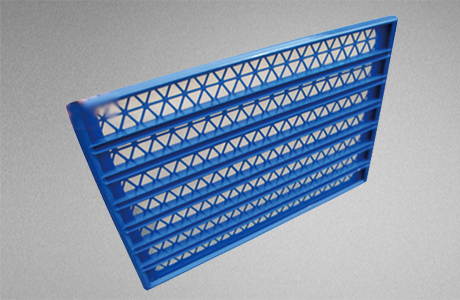
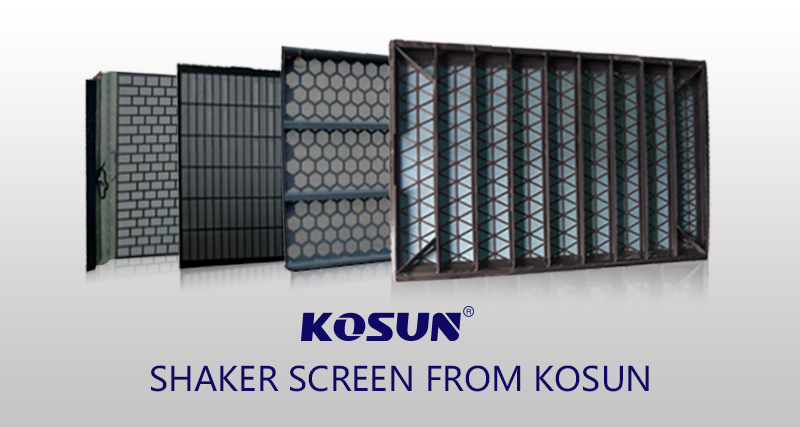
Shale shaker screens come in variety of sizes and shapes based upon shale shaker’s make and model. A Rectangular Heavy Duty Shaker Screen is mainly used for handling heavy solid drilling cuttings taken out during oil field drilling projects.

Shale shaker screens with high quality low price was attacted by clients around the world. Shaker screen design is unique inthis industry.

Drilling as such is widely used not only in oil and gas industry but in mining and coal cleaning industries also. Wherever the project demands handling heavy duty solid drilling waste management system , rectangular heavy duty shaker screens are deployed for use.

The main purpose of using shale shaker equipment is to separate out the drilling fluid from drilling solids i.e. drilling waste cuttings.
A Rectangular Heavy Duty Shaker screen uses two layers of finely knitted mesh material and one layer of a coarse mesh to enable the handling of the heavy duty solid waste to provide it better durability and better conductance.

shale shaker screens

There had been number of incidents where during the solid control system process, while shale shaker was deployed to separate drilling cuttings from drilling fluid, some thicker parts of solid would get stuck in the circulation and make their way through multiple layers of mesh of the shaker screen and over time burst the shaker screen’s mesh cloth. To prevent such incidents, rectangular heavy duty shaker screens came into existence.

RHD shaker screens follow proprietary multi layered technology, that enhances the overall permissibility of drilling fluid through the screen with much less resistance, which naturally enhances the performance of shale shaker equipment.

The shaker screens in RHD line are available in different variations, based on the particulate size they allow to permit through and these are standardized by the America Petroleum Institute through their labeling practice. API has labeled different shaker screens based on the holes size distribution measured with the help of light.

As the technology advances, the drilling industry is all set to go through much more modernized with start to finish automation.

Shaker Screen Installations Steps for Shale Shaker

Shaker Screen

A shale shaker screen is an integral part of the drilling  process as it directly contributes to the efficiency of solid control equipment. If not handled properly it may lead to a premature failure or damage of the shale shaker screens which could result in loss of resources as well as monetary loss for the operators. Thus it is very important to understand the proper installation process of a shaker screen in a shale shaker.

shaker screen
shaker screen

Let us take you through the shaker screen installation process one step at a time. The very first step in the process will be to shut down the equipment completely, unplug the power and wait for the equipment to come to a stationary position. Step two will be to clean the equipment that will hold the screen in place, in case you replacing the older ones, or want to just clean and refit the same screen, make sure the screen and the equipment is in clean condition and also look out for any wear and tear of screws or straps that holds to keeps the shaker screens in place. After this the third and final step is to mount the shaker screen panel onto the shaker deck and slid it toward the equipment to fit into the slot. Make sure that the draw bolts are unlocked beforehand and ready to engage with the screen panel’s feed end. Fasten all the screws and nuts back into the place.

The size and shape of shaker screen will vary from manufacturer to manufacturer and so will the fashion in which they will be mounted. Few popular examples are, Hook Strap Screen, Wedge Blocked Screen, Steel framed screen or composite frame screen. Each will essentially be different only in the way they are fastened to the  shale shaker deck.

Kosun is able to offer with such three series as oil and gas drilling solids control equipment, decanter centrifuges and drilling waste treatment equipment .